Focus on heavy equipment
Focus on heavy equipment


Users of sand dryers hope to achieve efficient dryer operation and minimize losses. Today, I will share four very practical tips to improve efficiency and reduce dryer losses.
1. Pay attention to the use of cooling water. The fan and pump used in the sand dryer are large-scale equipment, and the fan basically runs continuously, so the motor used is prone to heat generation and requires water cooling. But now, with increasingly serious environmental problems, water is also a scarce resource. It is recommended that users and friends recycle cooling water to improve efficiency and reduce losses. This not only reduces losses, but also saves water.
2. Pay attention to the overall heat insulation effect of the sand dryer. Drying work mainly uses heat energy, so making full use of heat energy has become a very important project. Therefore, please pay special attention to the heat insulation of the dryer, and no heat loss will occur in any link.

3. Pay attention to the design of the hot air distributor. If the heat energy comes into contact with wet materials, it must pass through a hot air distributor. How to design the hot air distributor of the dryer is an important task, which directly affects whether the material drying can meet the requirements.
4. Pay attention to the use of the inverter. The fan is an important supporting equipment for the dryer. It basically runs continuously and consumes a lot of money. The frequency converter is used here. After using the inverter, you can manually control the operation of the fan. In addition, frequency converters can be added to the dust removal equipment.
When the dryer starts to run, we first need to understand the usage of the dryer. Only by knowing how to operate and use can we make it work and achieve results. Generally speaking, the dryer manufacturer will send someone to give instructions to teach everyone how to operate the equipment for later use, and then the dryer's break-in period, remember to clean the dryer every day.
In addition to normal operation, various lubricants and coolants are also added. Generally speaking, if the operator is more skilled in drying, it can be used well in the equipment, and it is also beneficial for the running-in period. Of course, this also requires users to have requirements, which is also very useful for the running-in period.
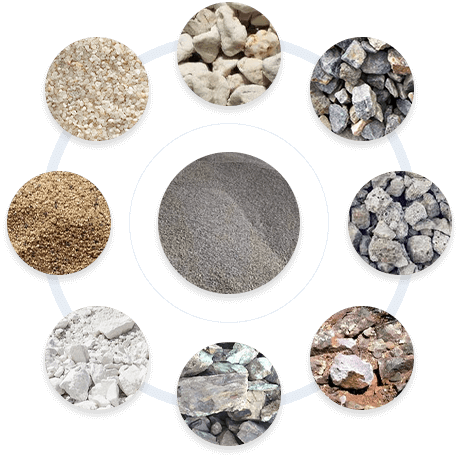
It should also be noted that during the running-in period of the dryer, the drying effect of the material during the running-in period. Generally speaking, the dryer can dry more materials, just like the sand dryer is suitable for drying sand. Therefore, the materials that can be dried by different dryers are different, and inappropriate materials cannot be selected for drying.
Desulfurization gypsum from power plants is an industrial by-product of flue-gas desulfurization. Characterized by high moisture content and a tendency to clump, it easily reabsorbs moisture and hardens when stockpiled. Long-term open-air storage not only
Foundries recycling used moulding sand often face one critical choice: standard single rotary dryer or three‑pass (triple‑drum) dryer. Both can dry reclaimed foundry sand, but their fit differs sharply based on your sand type, space, energy budget and qua
Many small limestone and heavy calcium carbonate processing plants have limited space and budgets. Large rotary drum dryers are unsuitable, and civil engineering modifications are expensive. Blindly investing in large equipment is not feasible for low-vol
Compared to standard industrial bentonite, the raw material used for cat litter demands much stricter processing standards. The finished product's market competitiveness hinges directly on factors such as clumping performance, dust levels, granule hardne