Focus on heavy equipment
Focus on heavy equipment


Sand is an important raw material for industries such as construction, casting, and glass manufacturing, but its natural water content is high, which directly affects the use effect and product quality. Sand drying can improve physical properties, optimize casting processes, and reduce transportation and storage costs, which is an indispensable part of industrial production.

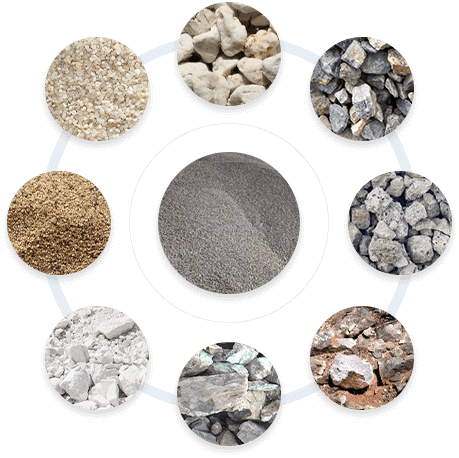
The rotary sand dryer is a multifunctional equipment, suitable for drying various types of sand such as yellow sand, river sand, quartz sand, etc. The equipment consists of a rotating body, a lifting plate, a driving device, a supporting device, a sealing ring, etc. Its core part is a horizontal slightly inclined cylinder. The material is added from the high end, and the high-temperature hot air and the material circulate in the cylinder and flow to the lower end under the action of gravity.
The rotary sand dryer has the following advantages:
1. High efficiency and energy saving
High heat utilization rate, thermal efficiency up to 80%-90%).
2. Large processing capacity
Drum equipment can quickly process a large amount of wet materials and is suitable for large-scale production needs.
3. Strong adaptability
It can adapt to different types of materials (such as river sand, yellow sand, coal slime, etc.), and can adjust operating parameters according to material characteristics.
4. High degree of automation
Equipped with intelligent control system to achieve continuous production and reduce manual intervention.
Zhengzhou Jiutian is a sand dryer manufacturer with more than 20 years of experience in the research and development and production of rotary dryers and mature technology. If you are interested in our equipment, please feel free to contact us, we will make free quotation for you.
Kaolin is widely used in industries such as ceramics, refractories, coatings (as a filler), and construction materials. Following washing and filter-pressing, kaolin typically retains a high moisture content, resulting in a viscous, clumping-prone materia
ETP (Effluent Treatment Plant) sludge from chemical and textile printing/dyeing plants is highly viscous. During the drying process, it is prone to sticking to vessel walls and forming clumps, which often leads to clogging in conventional drying equipment
Jiutian Company has recently finalized the implementation of an iron ore sludge drying project in Caofeidian, Tangshan, creating a highly efficient and stable drying production line for a local mineral processing enterprise. Designed with a processing cap
Desulfurization gypsum from power plants is an industrial by-product of flue-gas desulfurization. Characterized by high moisture content and a tendency to clump, it easily reabsorbs moisture and hardens when stockpiled. Long-term open-air storage not only