Focus on heavy equipment
Focus on heavy equipment


Mortar sand is a type of sand with small particles and uniform size, commonly used in construction. The ideal moisture content of mortar sand is generally not more than 0.5%. If the moisture content is too high, it will cause sand particles to bond into clumps, greatly reducing the uniformity and quality of mortar. Therefore, mortar sand must be dried before storage and use.
The most common type of mortar sand dryer is the rotary drum dryer, which consists of conveying equipment, heat source, drum, screening machine, dust collector, etc. The sand is transported to the hopper by a belt conveyor or bucket elevator, and then enters the feeding end of the dryer through the feeding device via the feeding pipe; The inclination angle of the feeding pipe should be greater than that of the sand material, so that the sand material can smoothly slide into the dryer; Wet sand and hot air can enter from the same feeding end of the dryer, which is called co current airflow drying process; It can also enter from different feeding ends of the dryer, which is called counter current airflow drying process; As the dryer rotates, the internal sand material moves forward from the feed end to the discharge end, during which the wet sand is dried by hot air; The dried material is then discharged and transported away by a belt conveyor or screw conveyor.

Moisture reduction: It can quickly reduce the moisture content of wet sand to below 0.5%, and evenly distribute the moisture content of dry sand.
Capacity range: Large processing capacity, customizable equipment with a processing capacity of 1-100T/h.
Energy adaptation: With a wide range of energy options, it can be matched with various fuels such as coal, gas, oil, biomass, etc.
Automation level: Can be matched with fully automated or semi automated production lines.
Structural form: According to on-site needs, a single drum dryer or a smaller three return drum dryer can be selected.
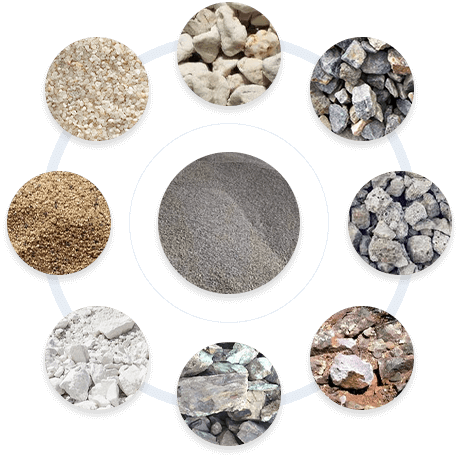
The rotary dryer can not only be used to dry mortar sand, but also to dry other types of sand with various particle sizes and moisture content. By adjusting various parameters and drying temperature, it can achieve compatibility with various types of sand. If you are interested in our mortar sand dryer, please feel free to contact us at any time.
Desulfurization gypsum from power plants is an industrial by-product of flue-gas desulfurization. Characterized by high moisture content and a tendency to clump, it easily reabsorbs moisture and hardens when stockpiled. Long-term open-air storage not only
Foundries recycling used moulding sand often face one critical choice: standard single rotary dryer or three‑pass (triple‑drum) dryer. Both can dry reclaimed foundry sand, but their fit differs sharply based on your sand type, space, energy budget and qua
Many small limestone and heavy calcium carbonate processing plants have limited space and budgets. Large rotary drum dryers are unsuitable, and civil engineering modifications are expensive. Blindly investing in large equipment is not feasible for low-vol
Compared to standard industrial bentonite, the raw material used for cat litter demands much stricter processing standards. The finished product's market competitiveness hinges directly on factors such as clumping performance, dust levels, granule hardne