Focus on heavy equipment
Focus on heavy equipment


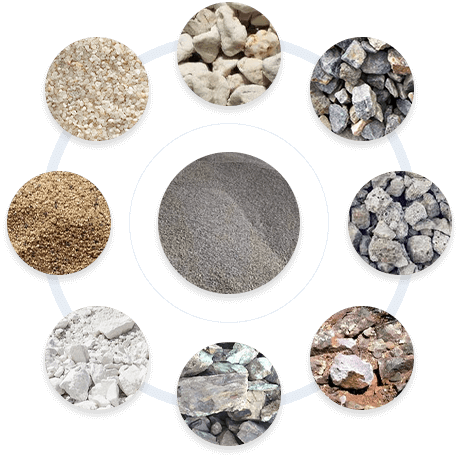
Quartz sand is a kind of non-metallic mineral, which is a kind of non-metallic mineral, which is hard, wear-resistant and stable in chemical properties. Main applications: metallurgy, ink silicon carbide, glass and glass products, enamel, cast steel, water filtration, soda, chemical, spray and other industries.

Quartz sand dryer, river sand dryer and sand dryer belong to the same type of dryer equipment. It is similar to mineral powder dryers. Mainly used for drying materials with a certain humidity and particle size range, widely used in building materials, metallurgy, chemical industry, cement industry, all kinds of mineral powder, limestone, coal powder, quartz sand, clay, yellow sand, foundry sand, scrub sand and various drying of metal concentrates, tailings and other materials that are not afraid of high temperature and slightly polluted by smoke and dust. The quartz sand dryer has the advantages of large output, low energy consumption, and low maintenance.
The quartz sand dryer is mainly composed of a frame, a heating source, a feeder, a feeder, a rotary drum, a material crushing device, a discharging machine, an induced draft fan, an unloader, and a power distribution cabinet.
Quartz sand material is fed into the barrel from the feeding end of the quartz sand dryer and pushed by the guide screw to the lifting plate. Due to the inclination and rotation of the body, the material is continuously lifted and scattered in the circumferential direction, and at the same time in the barrel. The internal movement is longitudinal; the high-temperature medium (hot flue gas) is folded to the outer flue through the drum and tail pipe, and the material and the high-temperature medium exchange heat through heat conduction and radiation, so that the water contained in the quartz sand material is heated and evaporated, thereby to be dried.
If you are interested in quartz sand dryer, please feel free to contact us.
Desulfurization gypsum from power plants is an industrial by-product of flue-gas desulfurization. Characterized by high moisture content and a tendency to clump, it easily reabsorbs moisture and hardens when stockpiled. Long-term open-air storage not only
Foundries recycling used moulding sand often face one critical choice: standard single rotary dryer or three‑pass (triple‑drum) dryer. Both can dry reclaimed foundry sand, but their fit differs sharply based on your sand type, space, energy budget and qua
Many small limestone and heavy calcium carbonate processing plants have limited space and budgets. Large rotary drum dryers are unsuitable, and civil engineering modifications are expensive. Blindly investing in large equipment is not feasible for low-vol
Compared to standard industrial bentonite, the raw material used for cat litter demands much stricter processing standards. The finished product's market competitiveness hinges directly on factors such as clumping performance, dust levels, granule hardne