Focus on heavy equipment
Focus on heavy equipment


Pond ash is a waste product generated by the combustion of coal in thermal power plants, it can be recycled to manufacture materials such as cement and concrete. Because pond ash has a high water content, stacking it can cause pollution, and the high water content can also affect transportation and reuse. Therefore, pond ash must first be dried. Among various drying processes, rotary dryers have advanced and mature technology, are currently the most widely used solution for drying pond ash. So, what are the benefits of using a rotary dryer for pond ash?

Pond ash is stored in ash ponds for extended periods, with significant variations in moisture content (20-50%). Traditional drying processes yield unevenly dried pond ash. The rotary dryer optimizes the production process for this scenario. The triple-pass design increases the residence time of pond ash within the dryer. The built-in dispersing device breaks up caked wet ash, ensuring that each particle can come into contact with hot air, achieving uniform heat transfer and enabling all materials to be evenly dried. This effectively addresses the issue of uneven moisture content.
Large power plants generate hundreds to thousands of tons of ash and slag every day, imposing high demands on the processing capacity of ash dryers. The ash rotary dryer can be customized in models from 5 to 100 TPH, and the equipment can operate continuously for 24 hours, meeting the continuous supply of ash and slag from large power plants and brick factories.
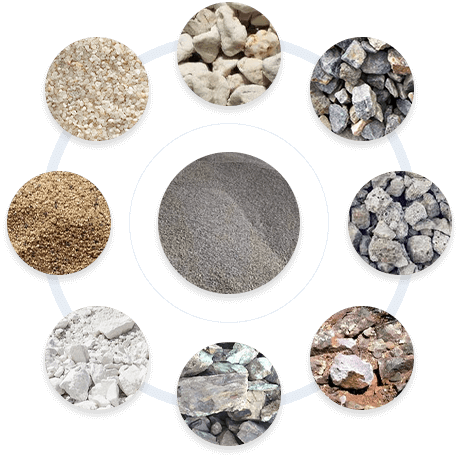
Thanks to the sturdy and spacious structure inside the drum and its anti-adhesion design, the rotary pond ash dryer is suitable for materials of various moisture contents and particle sizes. Not only pond ash, but also stones and slag with significant particle size differences can be effectively dried by the rotary dryer.
Unlike the complex structure of fluidized bed dryers, rotary pond ash dryer has a simple structure, mainly consisting of a rotary drum, lifting plate, heat source, etc. It has few internal components, so the risk of mechanical failure is low and it requires almost no maintenance. Also, the rotary dryer has stronger adaptability in heat source selection, users can choose the most economical and available fuel locally, such as coal, natural gas, biomass, and steam waste heat to reduce fuel costs.
The dried pond ash has good fluidity, making it easier to feed into mixers, conveyors, and silos without causing blockages. During transportation, due to it reduced weight and volume, the transportation costs and footprint is greatly reduced. The dried pond ash can be directly used as raw materials for bricks and cement in the construction industry, realizing economic value.
Rotary dryer is the most economical and efficient solution for drying pond ash. If you are interested in pond ash processing technology, come to contact us for pond ash dryer design, pricing, and project solutions.
Mortar sand is a type of sand with small particles and uniform size, commonly used in construction. The ideal moisture content of mortar sand is generally not more than 0.5%. If the moisture content is too high, it will cause sand particles to bond into c
The sludge rotary dryer is the most common sludge drying equipment, which effectively reduces the water content and volume of sludge due to its high moisture content and viscosity. It can dry sludge with a water content of 90% in one go to the finished pr
Phosphate concentrate is a product of phosphate ore (mainly composed of apatite) that has been enriched and purified through mineral processing. It is the main raw material for the production of phosphate chemical products such as phosphoric acid and phos
Alumina plays an important role in modern industries such as aluminum electrolysis, aerospace, and electronic ceramics, and is irreplaceable in promoting the development of new energy and high-tech industries. The alumina rotary kiln, as a key equipment f